When Winter Roads Turn Deadly: The 72-Hour Evidence Window After a Snowy Pile-Up
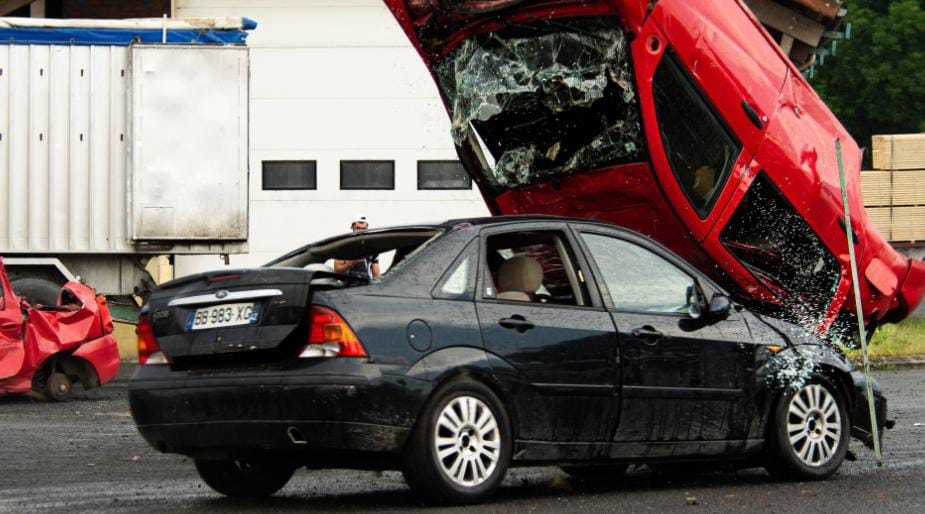
A November Morning on I-294, The temperature dropped twelve degrees between midnight and 6 a.m. on November 18. By 7:15, the southbound lanes of I-294 near Willow Road had a glaze of black ice thin enough to be invisible under the headlights of the morning commute. The first driver felt her Honda Civic drift sideways. She corrected, overcorrected, and spun into the center lane. The semi behind her locked up. So did the Nissan Altima two cars back. Within ninety seconds, seventeen vehicles were involved.
Winter crashes are not just more dangerous. They are harder to investigate, harder to reconstruct, and harder to prove in court. The same conditions that cause the collision—ice, snow, wind—immediately begin erasing the evidence. Tire marks disappear under fresh snowfall. Road surface samples melt before the tow trucks clear the scene. Witnesses leave. The highway department sends plows and salt spreads within the hour, obliterating the physical record of what happened and in what order.
For the injured, the legal clock starts ticking while they are still in the ambulance. Investigators have perhaps 72 hours to capture what the road looked like, what the vehicles show, and what the weather was doing before the scene is gone forever. After that, the case becomes a battle of competing narratives, and the side with the better documentation wins.
How Snowpack and Ice Erase Critical Crash Evidence
Accident reconstructionists depend on physical evidence. In a summer crash, skid marks can last for weeks. Gouge marks in asphalt persist. Debris fields—glass, plastic trim, metal fragments—stay put until someone sweeps them. Investigators can return the next day, the next week, and still measure the distance from pre-impact braking to final rest position. They can photograph the road surface under good light. They can take paint transfers from the guardrail.
Winter erases all of that. Snow covers tire marks before the police report is finished. Ice melts and refreezes, changing the surface conditions hour by hour. Plows push debris into the ditch. Salt trucks turn black ice into slush, then slush into wet pavement, destroying any record of what the road was like when the first driver lost traction. If the crash happened at dawn and the road reopened by noon, the reconstructionist might arrive to find the highway looking dry, clear, and safe—nothing like the scene that caused the pile-up.
The absence of evidence becomes its own problem. If there are no skid marks, did the driver never brake, or did the ice prevent the tires from leaving marks? If the vehicle came to rest in an unusual position, was that from the impact, or from sliding on ice after the impact? Winter crashes often involve multiple liable parties—the driver who lost control, the driver who rear-ended them, the trucking company whose rig jackknifed—and sorting out who did what requires knowing the sequence. When the sequence is written in snow, it does not last.
Temperature records, weather station data, and road sensor logs become critical. So do the photos taken by the first officer on scene, often shot hastily from a patrol car with poor lighting and no sense of what a lawyer will need six months later. Reconstructionists now use drones to capture overhead imagery before the plows arrive, but many local police departments do not have that equipment. If the crash happened on a county road at 6 a.m., the best documentation might be a dispatcher’s timestamped log entry and a truck driver’s dashcam—if one was running.
The Chain-of-Custody Problem When Roads Reopen Fast
Chain of custody is a term borrowed from criminal law. It means being able to show that the evidence presented in court is the same evidence collected at the scene, unaltered and properly documented at every step. In a winter crash, that chain is fragile. The road surface sample taken at 8 a.m. has to be stored cold to preserve ice content. The vehicle photos have to be timestamped and geotagged. The measurements have to be made before the wreckage is moved. Any gap in that chain gives the defense an opening: how do we know this is what the road really looked like?
Transportation departments face their own pressure. A closed highway costs the state tens of thousands of dollars per hour in lost commerce and detour delays. The decision to reopen is not always made by the crash investigator. It is made by a district traffic manager balancing safety, politics, and budgets. In practice, this means winter crash scenes are cleared faster than summer ones. The road gets salted, the lanes reopen, and the investigation continues—if it continues—on photographs and memories.
Accident reconstructionists have learned to work fast. The good ones arrive with laser scanners that can map the entire scene in under an hour, recording the position of every vehicle, every piece of debris, and the road grade to within a centimeter. They take surface temperature readings with infrared guns. They scrape samples of ice or slush into sterile containers for later analysis. They interview drivers and witnesses before those people leave the scene, because people remember details better in the first hour than they will in a deposition six months later.
Jurisdictional differences matter. A crash on Interstate 294 in Illinois falls under state police jurisdiction. They have training, equipment, and protocols for winter crashes because they handle dozens of them every season. A crash on a rural county road in northern Georgia might be handled by a two-person sheriff’s office that sees ice once every five years. The quality of the initial investigation varies wildly. So does the likelihood that anyone thought to preserve the evidence a lawyer will need.
What Happens in the First 72 Hours After a Winter Crash
The first call comes from the patrol officer at the scene. Then the tow truck, dispatched by the highway department or the driver’s auto club. Then the ambulance, if anyone reports pain. Then the insurance company, sometimes within hours, sometimes not until the vehicle is already in a salvage yard being stripped for parts. Each step creates a record. Each record is a piece of the puzzle, but only if someone knows to ask for it.
The police report is not finished on scene. The officer writes a preliminary narrative, assigns a case number, and moves on to the next call. The full report—with diagrams, witness statements, and the officer’s opinion on fault—might not be available for two to three weeks. By then, memories have faded. The hospital intake note is written by an ER nurse or paramedic who is documenting injuries, not liability. It will say “patient reports neck pain” but not “patient was rear-ended at 7:15 a.m. on black ice after another vehicle lost control.” That context has to be added later, if anyone remembers to add it.
Victims are in shock. They are dealing with airbag burns, broken ribs, shattered windshields, and the sudden loss of their primary vehicle in the middle of winter. They are not thinking about preserving the SUV’s tire tread for a lawsuit. They are thinking about how to get their kids to school tomorrow. They sign the tow truck’s authorization form without reading it. They give a recorded statement to the insurance adjuster because the adjuster says it is required to process the claim. They agree to an independent medical exam because the letter said it was “routine.” All of these are mistakes, but they are understandable mistakes made by people who have just been through a trauma.
Cold weather masks injuries. Adrenaline and shock suppress pain, and cold numbs soft tissue. A driver might walk away from a winter crash feeling sore but functional, only to wake up the next morning unable to turn their head. Whiplash symptoms peak 24 to 48 hours after impact. Herniated discs might not show up on imaging for days. This delayed onset creates a documentation gap that insurers will later exploit, claiming the injury must have happened later, or was pre-existing, or is being exaggerated.
Attorneys in cities with heavy winter weather have learned to move immediately. Some firms keep investigators on standby during snowstorms, ready to dispatch to crash sites before the plows arrive. In Chicago, where winter crashes are routine, a Wilson PC Chicago car accident lawyer might have a reconstructionist on scene before the vehicles are towed, photographing tire positions and scraping ice samples while the police are still taking statements. That kind of fast response is expensive, but it is often the difference between winning and losing a case against a well-defended trucking company or municipality.
Medical evaluation should happen the same day, even if the injury feels minor. That creates a contemporaneous medical record linking the crash to the symptoms. It documents the injury before swelling sets in, before inflammation peaks, and before an insurance company can argue that the gap in treatment means the injury was not serious. The emergency room is one option. An urgent care clinic is another. What matters is the timestamp and the causal link in the medical note.
Regional Differences: How a Buckhead Ice Storm Differs From a Chicago Blizzard
Chicago gets winter. The city owns 300 salt trucks. Drivers know to slow down, increase following distance, and avoid sudden braking. Snow tires are common. The highway department pre-treats roads before a storm. Police and fire departments train for ice rescues. Accident reconstructionists have winter crash protocols because they use them every year. The system is not perfect—pile-ups still happen—but the infrastructure is built for it.
Atlanta does not get winter, at least not in the way Chicago does. The city gets ice storms every few years, enough to be dangerous but not enough to justify the fleet of specialized equipment a northern city maintains. When an ice event hits Buckhead or the northern suburbs, the results can be catastrophic. In January 2014, a surprise ice storm stranded thousands of drivers on I-285 and Georgia 400 for more than 20 hours. Crashes occurred in waves as drivers unfamiliar with ice piloted vehicles with worn all-season tires on roads that had not been salted.
Southern crashes raise different liability questions. Was the driver negligent for going out in conditions they were not trained to handle, or was the road department negligent for failing to treat a surface that weather forecasts clearly predicted would freeze? Georgia law allows claims against the state for road maintenance failures, but the standard is high. The plaintiff has to show that the hazard was known, that the state had time to fix it, and that the failure to act was more than just a bad judgment call. Those cases are hard to win, but the unfamiliarity of winter weather in a southern city sometimes works in the plaintiff’s favor: a jury in Atlanta understands that no one here knows how to drive on ice.
Vehicle equipment becomes part of the case. In Chicago, running summer tires in January might be considered negligence. In Atlanta, where some winters never drop below freezing, it is normal. Trucking companies operating in the South sometimes fail to equip their rigs with tire chains or train their drivers on winter protocols, assuming they will never encounter snow. When they do, and a jackknifed semi blocks three lanes of I-75, that lack of preparation can become a liability.
Medical documentation matters in both climates, but southern cities face a different challenge. Fewer people have experience with winter injuries. Fewer clinics are used to seeing them. A driver in Buckhead who develops delayed neck pain after an ice-related crash might wait several days to seek treatment, thinking the stiffness will pass. That delay creates a gap the insurance company will exploit. Immediate care at an Atlanta accident injury clinic establishes contemporaneous records that link the injury to the crash before an adjuster can argue it was caused by something else. The timing of that first visit—ideally within 72 hours—determines whether causation can be proven or whether it becomes a swearing match.
The Traction Defense: When Tire Choice Becomes a Liability Question
Tire condition shows up in discovery. Defense attorneys subpoena maintenance records, tire-purchase receipts, and inspection logs. They want to know when the tires were last replaced, what the tread depth was, and whether the driver knew they were worn. In some states, driving on bald tires in winter weather can be evidence of negligence per se. In others, it is just one factor among many. Either way, it matters.
Tire type matters too. All-season tires are a compromise. They work in most conditions but excel in none. Snow tires—designated by a mountain-snowflake symbol—have deeper tread and softer rubber compounds that stay flexible in cold. In a winter crash, the difference in stopping distance between snow tires and worn all-seasons can be 30 to 40 feet at 40 mph. That can be the difference between stopping short of a collision and causing a pile-up.
Some jurisdictions mandate winter equipment. Colorado requires passenger vehicles to have winter tires or chains on certain mountain passes during snow season. California requires chains on trucks over 10,000 pounds when chain controls are in effect. Violating those requirements does not automatically make a driver liable, but it shifts the burden. The driver has to explain why they thought they could safely proceed without the required equipment.
Commercial vehicle standards are stricter. Federal Motor Carrier Safety Administration rules require that truck tires have at least 2/32-inch tread depth on steering axles and 4/32-inch on other axles. Trucking companies have a duty to inspect and maintain their fleets. If a semi loses control on ice and the post-crash inspection reveals tires worn below legal limits, the company faces not just civil liability but potential federal fines. Plaintiffs’ attorneys know this. They subpoena the truck’s maintenance logs and look for patterns—deferred service, skipped inspections, drivers reporting problems that were ignored.
The discovery process in a winter crash case digs into preparation. Did the driver check the weather before leaving? Did they have an alternative route? Did they reduce speed? Did they know their tires were marginal and take the risk anyway? In some cases, the driver’s phone records become evidence. If the weather app on their phone showed a severe winter storm warning at 6 a.m. and they departed at 6:15 anyway, that undermines the “I had no warning” defense. Digital evidence is harder to fabricate than memory.
What You Should Do in the First Week After a Winter-Weather Crash
Start with your own vehicle. Before you authorize repairs, photograph everything. Take close-ups of the tires, showing the tread depth and brand. Photograph the damage from multiple angles. If the vehicle is still drivable, photograph the odometer and the VIN plate. If it is not, photograph it in the tow yard before the insurance company has it moved to a salvage auction. These photos become your evidence if the insurer later claims the damage was pre-existing or if the defense argues your tires were worn.
Request the full police report, not just the exchange-of-information sheet handed out at the scene. The full report includes the officer’s diagram, witness statements, and often a narrative opinion on fault. In some states, you can request the report online within 72 hours. In others, you have to go to the police station in person. Do not wait. The sooner you have the report, the sooner your attorney can identify problems—missing witnesses, incorrect vehicle positions, an officer’s opinion that contradicts the physical evidence.
Get a medical evaluation even if you feel fine. This is especially important in winter crashes where cold and adrenaline mask injuries. Tell the doctor or chiropractor that you were in a crash. Describe the impact, the weather conditions, and any immediate symptoms. Make sure the medical note says “patient was in a motor vehicle collision on [date]” and links your symptoms to that event. This is not about exaggerating injuries. It is about creating a contemporaneous record that proves causation.
Document the weather. Save the local news coverage if the crash was part of a larger storm event. Print or screenshot weather service reports showing temperature, precipitation, and road conditions at the time of the crash. If the highway department issued travel warnings, save those too. These are not always preserved in the police report. If the case goes to trial two years later and the defense claims the roads were fine, dated weather records are the rebuttal.
Do not give a recorded statement to anyone’s insurance company without consulting an attorney first. The adjuster will call within days, sometimes within hours. They will say they just need your side of the story to process the claim. What they are actually doing is locking you into a version of events before you have had time to think, to heal, or to consult someone who understands how these cases work. You have a duty to cooperate with your own insurer under the policy terms, but that cooperation does not require an immediate recorded statement. A brief written notice of the crash is usually sufficient.
If the crash involved a government-maintained road, you may have to file a notice of claim within six months or less, depending on the state. This is much shorter than the statute of limitations for ordinary negligence cases. Missing the deadline usually means you lose the right to sue, no matter how strong the case. An attorney can tell you whether the road conditions or maintenance failures might support a claim against the city, county, or state, and whether that claim is worth pursuing. Many are not, but the ones that are require fast action.
When the Road Was the Problem: Suing Municipalities for Winter Maintenance Failures
Sovereign immunity is the default rule: you cannot sue the government without the government’s permission. Most states have carved out exceptions through tort claims acts, but those exceptions are narrow. A city or state is generally not liable for discretionary decisions—policy choices about how to allocate resources, which roads to salt first, or whether to pre-treat before a forecasted storm. Those are judgment calls, and courts defer to them.
Ministerial failures are different. If the city has a policy that roads will be salted when the temperature drops below 28 degrees, and the temperature was 25 degrees for six hours before the crash, and the salt trucks never came, that is not a judgment call. That is a failure to follow the city’s own protocol. If residents called the public works department reporting a dangerous ice patch at a specific intersection, and the calls are logged, and no one responded, that is a ministerial failure. Those cases can be won, but they require documentation—logs, weather records, witness statements, and often internal emails from the road department showing they knew about the hazard and did nothing.
Maintenance records are discoverable but hard to get. Cities do not advertise their failures. The plaintiff’s attorney has to subpoena the road department’s records for that specific street on that specific date, and then cross-reference them with dispatch logs, weather station data, and accident reports. The city will argue that it had limited resources, that it prioritized highways over side streets, and that it met the standard of reasonable care. The plaintiff has to show that the city’s inaction was unreasonable given the known conditions.
Realistic expectations matter. These cases are expensive to litigate, require expert testimony, and face a jury that may be sympathetic to a cash-strapped city. They settle less often than ordinary car-crash cases because municipalities have deep pockets and a political interest in not setting precedent. But when the case is strong—a known hazard, multiple complaints, clear records showing inaction—the city will sometimes settle to avoid a verdict that might embolden other plaintiffs. The timeline for filing is short, often 180 days in some states, so the decision to pursue has to be made fast.
After the Thaw: Settlements and the Long Tail of Soft-Tissue Claims
Winter crashes take longer to resolve. The liability picture is more complex, with multiple defendants and layers of insurance. The at-fault driver might have minimum coverage. The trucking company might have a million-dollar policy. The city might have a self-insured retention. The plaintiff’s attorney has to figure out who has the deepest pocket and the weakest defense, and that takes time.
The medical reality is slow too. Soft-tissue injuries from winter crashes do not heal on an insurance company’s schedule. Whiplash can take six to twelve months to resolve, and some cases never fully resolve. Herniated discs might require surgery, or they might respond to physical therapy, but no one knows which until the patient has tried conservative treatment for at least six months. Traumatic brain injuries from a head strike against the steering wheel can take a year or more to reach maximum medical improvement, especially if the symptoms include cognitive deficits or mood changes.
Insurance adjusters know this, so they make early settlement offers. The call comes while snow is still on the ground. The offer is usually two or three months of lost wages plus medical bills to date, with a waiver releasing all future claims. The adjuster will frame it as a quick, hassle-free resolution. What they are actually doing is buying out a claim before the plaintiff knows how bad the injury really is. If the herniated disc ends up requiring surgery, and the surgery costs $80,000, and the plaintiff already signed a release for $15,000, that is the plaintiff’s problem.
The rule is simple: do not settle until you have finished treatment or your doctor has told you that you have reached maximum medical improvement. That might take a year. It might take eighteen months. During that time, you document every doctor visit, every physical therapy session, every day you miss work, and every prescription. That documentation becomes the foundation of the demand letter. The stronger the documentation, the harder it is for the defense to lowball the case.
Winter crashes leave a long paper trail. The police report, the weather records, the tow truck invoice, the hospital bill, the prescription receipts, the pay stubs showing lost income, the vehicle repair estimate, the photos of the black ice, the reconstructionist’s report, the tire tread measurements, and the medical records all stack up. The plaintiff who has kept all of it, organized by date, is in a much stronger position than the one who threw away half the paperwork and is now trying to remember which clinic they went to in February. Settlements happen when the defense realizes the plaintiff can prove the case. Proof lives in the details, and the details live in documents created in the first 72 hours after the crash—before the ice melted, before the scene was cleared, and before anyone forgot what that morning looked like.
Media Contact
Company Name: The Wilson PC
Email: Send Email
Country: United States
Website: https://www.thewilsonpc.com/


