Electric Wheelchair Development in the Era of Accessible and Portable Mobility
China – September 1, 2026 – As populations age and accessibility becomes a growing concern in healthcare and social development, demand for mobility-assistance equipment is receiving increasing attention worldwide. The market for Electric Wheelchair products is also evolving as users, healthcare providers, distributors and caregivers look for mobility solutions that balance functionality, portability, comfort and ease of use.
According to the World Health Organization (WHO), approximately 80 million people worldwide are estimated to require a wheelchair to support mobility. The organization also expects demand for assistive technology to increase as populations age and chronic health conditions become more prevalent.
This shift is influencing how powered mobility equipment is developed and evaluated. Rather than focusing only on motorized movement, manufacturers and distributors are increasingly considering weight, portability, control systems, seating configuration, battery performance and the environments in which products will be used.
Why Electric Wheelchair Demand Is Changing
Traditional manual wheelchairs remain an important mobility solution, but they can require significant upper-body strength and physical effort, particularly when users need to travel longer distances or navigate inclines.
An Electric Wheelchair provides powered movement and can reduce the physical effort required to operate a wheelchair. This makes powered mobility relevant to users with different levels of mobility limitations and to situations where independent movement is difficult with a manual wheelchair.
At the same time, buyers are becoming more selective about product configuration.
When evaluating an electric wheelchair, distributors, healthcare organizations and end users may consider:
- Overall product weight
- Folding and transportation requirements
- Maximum user weight
- Battery configuration and range
- Control system and maneuverability
- Seating and positioning
- Indoor and outdoor application
- Wheel and suspension configuration
- Applicable safety and regulatory requirements
These factors mean that product selection is increasingly based on the intended user and application rather than simply whether a wheelchair is powered.
Lightweight Design Is Becoming More Important
Portability has become an important area of development within powered mobility equipment.
For users who frequently travel, store equipment in vehicles or need assistance when transporting a wheelchair, reducing product weight can make a significant practical difference. Manufacturers are therefore exploring lightweight materials, folding structures and more compact product designs.
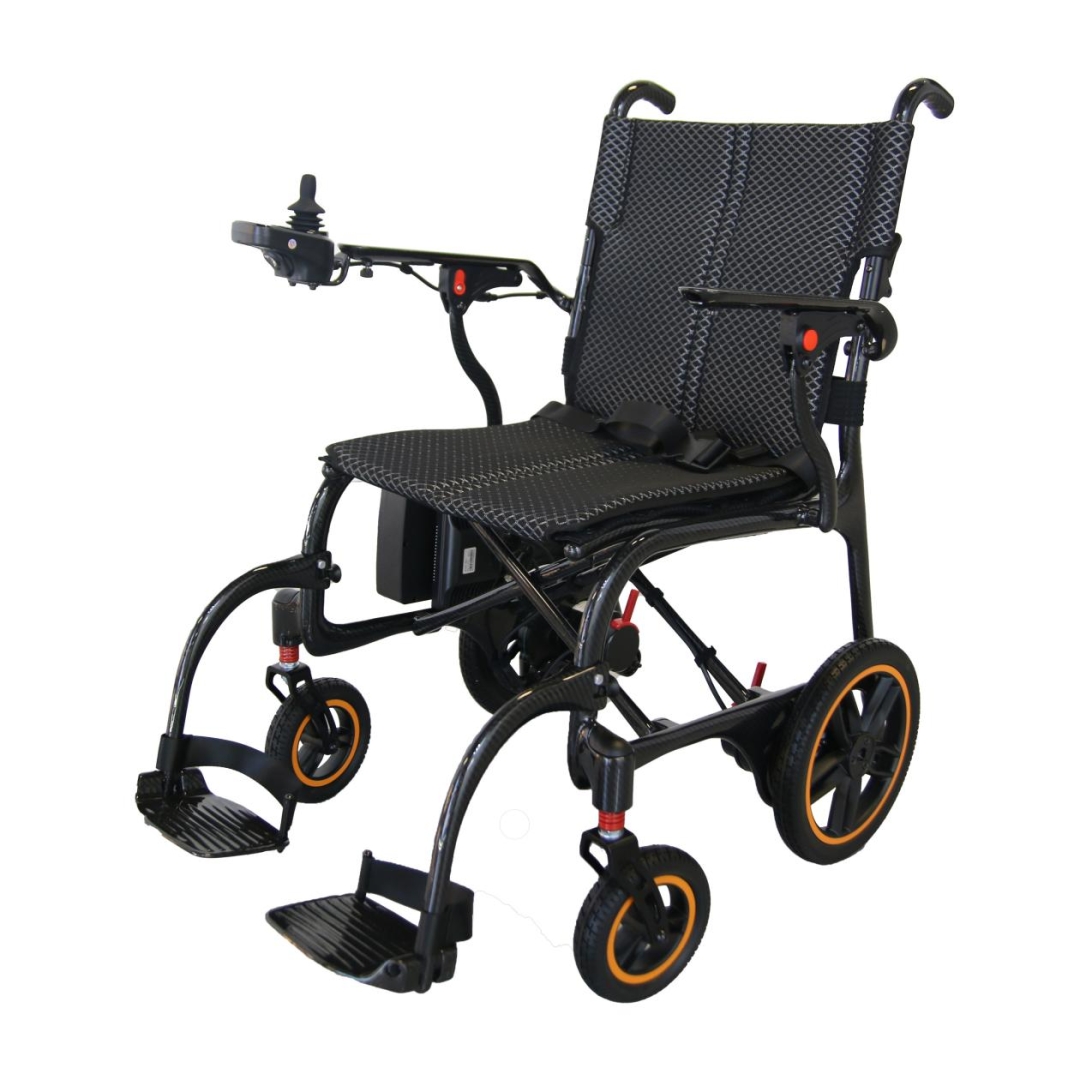
Carbon-fiber construction is one example of this development. Dayang Medical currently lists portable carbon-fiber power wheelchair models, including a model with a stated weight of 13.5 kg and a maximum load capacity of 136 kg.
Lightweight design, however, involves more than reducing the overall weight of a product. Manufacturers must also consider structural strength, user capacity, stability, durability and transportation requirements.
What This Means for Buyers and Distributors
For healthcare distributors and mobility-equipment buyers, selecting an Electric Wheelchair involves evaluating more than product appearance or motor specifications.
Procurement teams may need to consider whether a product is appropriate for the target market, how easily it can be transported, what type of battery system it uses, whether replacement components are available and which regulatory requirements apply to the destination market.
Key evaluation areas can include:
- Product specifications and load capacity
- Battery and charging configuration
- Folding or disassembly requirements
- Product dimensions and transportability
- User comfort and seating configuration
- Intended indoor or outdoor application
- Spare parts and after-sales support
- Quality management and regulatory documentation
- Manufacturing consistency and supply capability
For distributors, these factors can affect not only product selection but also inventory planning, customer support and long-term product availability.
Accessibility Remains a Global Challenge
The development of powered mobility products is taking place within a wider global accessibility challenge.
The United Nations estimates that approximately 1.3 billion people, or 16% of the world’s population, live with a disability. Access to appropriate assistive technology is an important factor in enabling people to participate more fully in everyday activities.
Wheelchairs are one part of the broader assistive technology sector. Appropriate product selection depends on individual mobility needs, physical conditions, living environments and the level of independence a user requires.
As a result, the development of mobility equipment is increasingly connected with user-centered design rather than simply adding additional technical functions.
Product Selection Requires a More User-Centered Approach
Different users may require significantly different wheelchair configurations.
For example, a user primarily moving around a home may prioritize compact dimensions and maneuverability, while someone who regularly travels may place greater importance on folding design and transportation weight. Outdoor users may have different requirements relating to wheel configuration, ground clearance, battery capacity and stability.
This makes product configuration an important consideration for manufacturers and distributors.
Instead of treating the Electric Wheelchair as a single standardized product category, the market is increasingly divided into different applications, including lightweight portable models, folding models, multifunctional products and wheelchairs designed for specific indoor or outdoor environments.
How Dayang Medical Supports Mobility Equipment Development
Guangdong Dayang Medical Technology Co., Ltd., established in 2009, manufactures rehabilitation and mobility equipment for international markets.
The company’s product portfolio includes electric wheelchairs, manual wheelchairs, transfer chairs, walkers and other mobility-related equipment. Its website reports more than 600 employees and a 100,000-square-meter factory footprint, with products exported to more than 100 countries and regions.
The company lists ISO 13485 and ISO 9001 certifications as well as FDA and TÜV-related certifications on its website, with CE approval for its products.
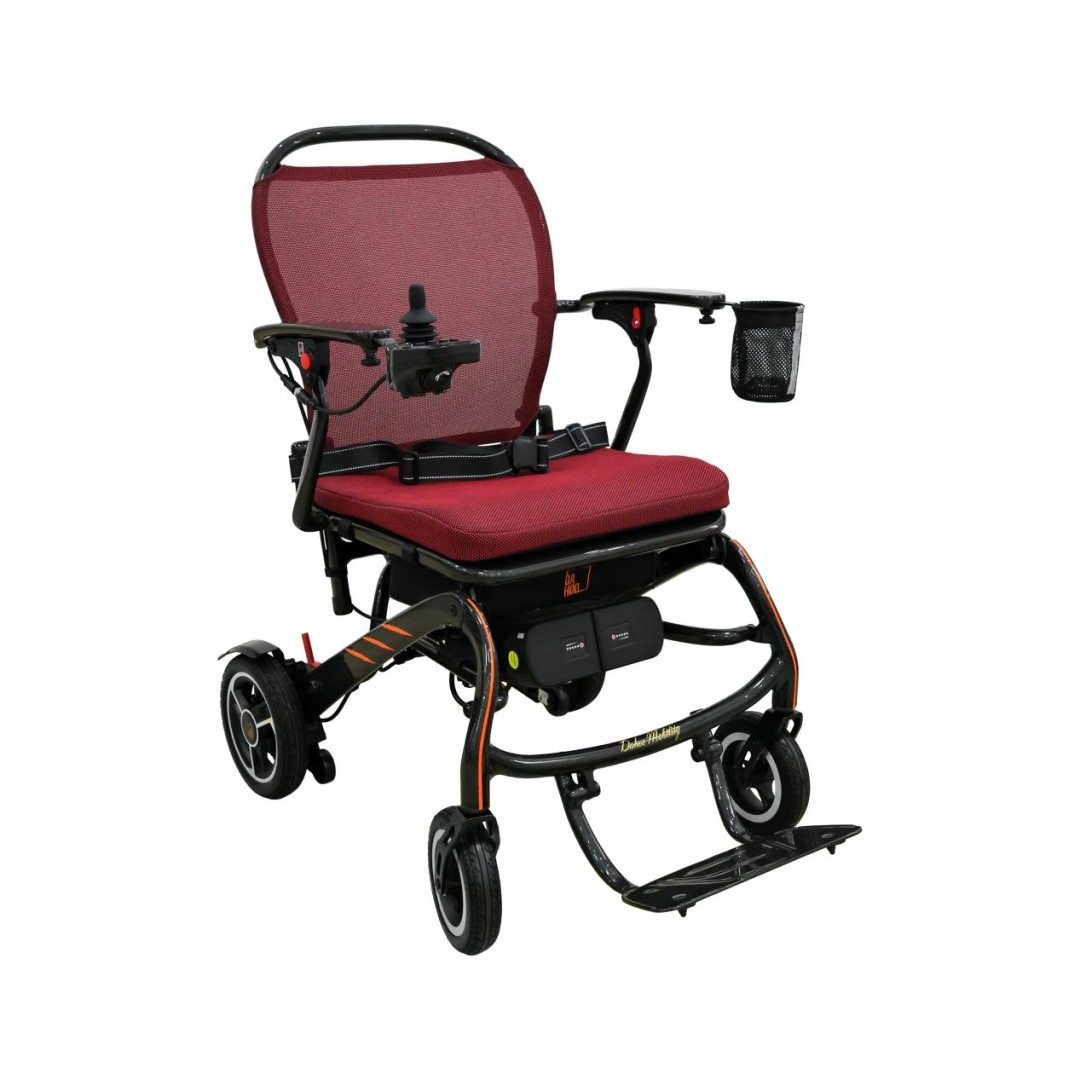
Its electric wheelchair portfolio includes lightweight, folding and multifunctional configurations designed for different mobility requirements. The company’s listed carbon-fiber power wheelchair products also reflect the industry’s broader movement toward lighter and more portable powered mobility equipment.
Manufacturing and Quality Considerations
As mobility equipment directly affects everyday movement and user safety, manufacturing consistency and quality management remain important considerations for buyers.
For international distributors, supplier evaluation can involve several areas:
- Quality management systems
- Product testing and documentation
- Manufacturing consistency
- Regulatory compliance
- Product configuration
- Supply capacity
- Spare parts availability
- Technical communication
- After-sales support
These factors can become particularly important when products are distributed across different markets with different regulatory and documentation requirements.
Choosing an Electric Wheelchair for Different Applications
Selecting an electric wheelchair should begin with the intended application and user requirements.
For portable applications, overall weight and folding dimensions may be important. For longer-distance use, battery performance and seating comfort may receive greater attention. For outdoor environments, stability, wheel configuration and ground clearance can become more relevant.
For distributors, understanding these differences can also help determine which product configurations are appropriate for different customer groups.
Rather than evaluating products solely on motor power or price, buyers can consider the complete combination of mobility performance, portability, user comfort, safety, documentation and long-term serviceability.
Looking Ahead
The development of mobility equipment is likely to remain closely connected with demographic change, accessibility initiatives and advances in lightweight engineering.
Future Electric Wheelchair development may continue to focus on reducing transportation difficulties, improving control systems, optimizing battery technology and creating products that better adapt to different user environments.
At the same time, accessibility is not only a product-development issue. Availability, affordability, appropriate product selection and access to maintenance and support will also influence whether users can benefit from assistive mobility technology.
Conclusion
The global mobility-equipment market is moving toward more diverse and user-oriented solutions. As the need for assistive technology grows, Electric Wheelchair products are being evaluated not only by their ability to provide powered movement but also by portability, weight, comfort, control, battery configuration, intended application and regulatory requirements.
For healthcare distributors and mobility-equipment buyers, selecting the appropriate product increasingly requires a broader evaluation of technical specifications, manufacturing quality and long-term supply considerations.
ABOUT US
Guangdong Dayang Medical Technology Co., Ltd., established in 2009, manufactures electric wheelchairs and other rehabilitation and mobility equipment for international markets. With more than 600 employees, a reported 100,000-square-meter factory footprint and products supplied to more than 100 countries and regions, the company provides a range of mobility configurations, including lightweight, folding and multifunctional electric wheelchair products.
Media Contact
Company Name: Guangdong Dayang Medical Technology Co., Ltd.
Contact Person: Sales Manager
Email: Send Email
Country: China
Website: https://www.dayangmedtech.com/


